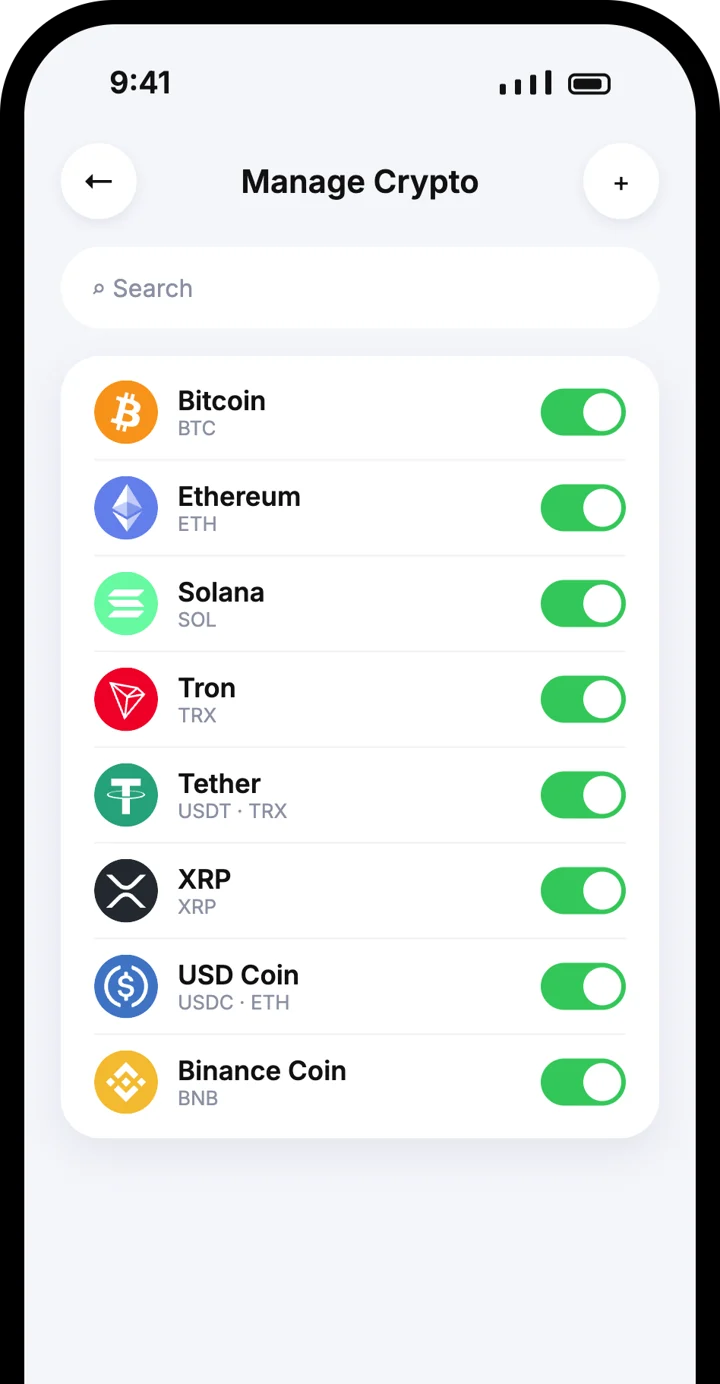



Atom Wallets supports the chains people actually use, including Bitcoin, Ethereum, Solana, TRON, BNB Chain, Polygon, Avalanche, and several other EVM and non-EVM networks. Adding a new chain is a single tap, no manual RPC setup or token contract pasting.
Each network is fully native, meaning you sign with the correct key type for that chain, see the right block explorer link, and pay the gas token that chain expects. There is no wrapping, bridging tricks, or third-party custody hidden behind the scenes.

A multi chain wallet is only useful if backup is simple. Atom uses a single 12 or 24 word recovery phrase that derives every chain account using the standard derivation paths each network expects.
Restore on any device and your full portfolio across Bitcoin, Ethereum, Solana, and every other supported chain comes back exactly as it was. No need to track separate seeds for separate networks.

The built in swap interface routes through major aggregators so you can move from, say, USDT on TRON to ETH on Ethereum without leaving the wallet. Quotes show the rate, network fee, and estimated arrival time before you confirm.
The portfolio view aggregates everything into a single fiat total with per asset and per chain breakdowns. You can spot which network holds which balance at a glance, useful when deciding which chain to send from to minimise fees.
Multi chain support is also a fee strategy. Sending USDT on TRON costs a fraction of sending it on Ethereum, and Atom surfaces the cheaper option directly in the send flow. The Buy Energy feature on TRON cuts TRC-20 transfer costs by roughly 50% by prepaying network resources.
On chains where you do not hold the native gas token, Atom can deduct the network fee from your stablecoin balance instead, removing the need to keep small amounts of ETH, BNB, or SOL just for gas.