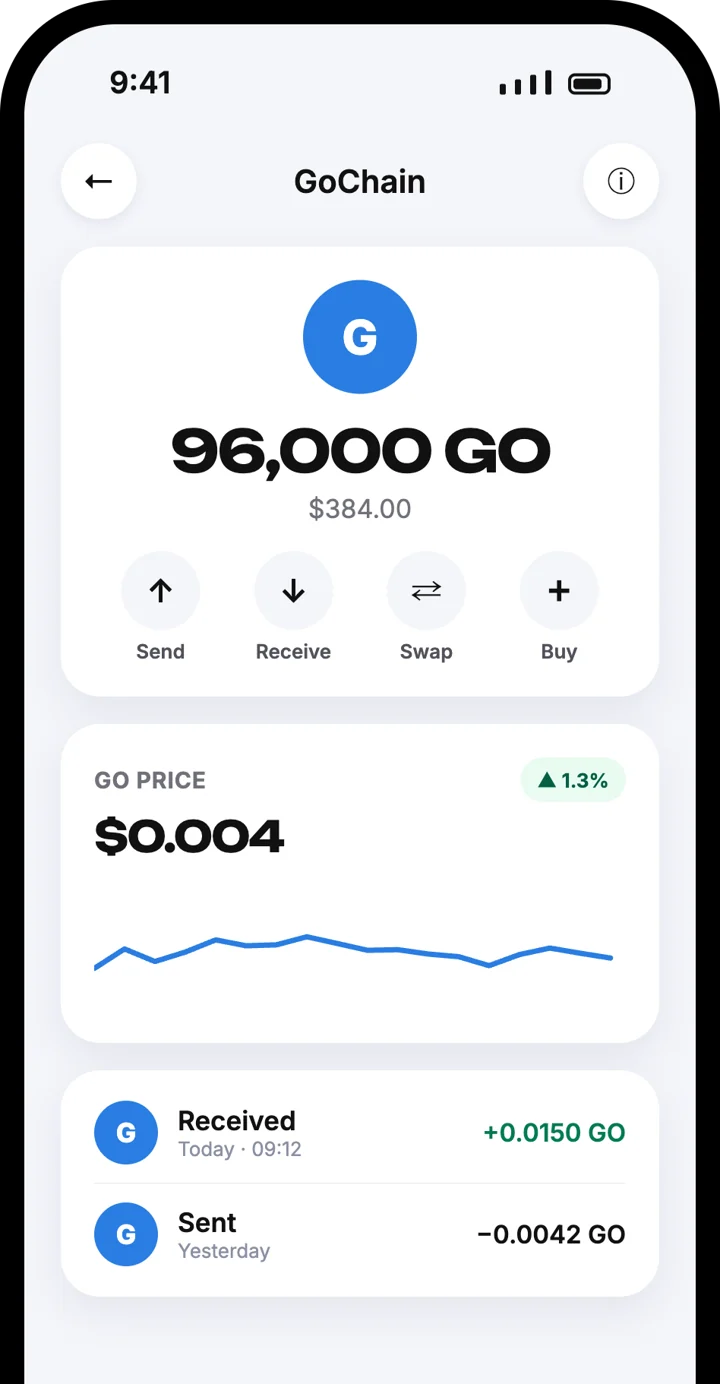


GoChain describes itself as an EVM compatible blockchain that uses a proof of reputation consensus mechanism, an alternative to proof of work that relies on a set of known, reputationally accountable validators to process blocks. GO is the network’s native token, used to pay transaction fees and interact with contracts deployed on the chain.
Because GoChain is EVM compatible, it uses the same account and address format as Ethereum, which is one reason people searching for a GoChain wallet often end up comparing general EVM wallets rather than a single dedicated app. GoChain itself is not among the chains Atom Wallets currently supports, so treat this page as background research rather than a support claim.

EVM compatible chains, including Ethereum, BNB Chain, Polygon, Avalanche’s C-Chain, and networks like GoChain, all use the same underlying address format derived from a public key. This is why a single private key can technically generate an address that looks valid across many EVM networks.
The important caveat is that a valid-looking address does not guarantee the asset exists or is recoverable on that network. Sending a token to an EVM address without confirming the correct chain is selected can result in funds going to a network where you have no way to access or recover them, even though the address itself was never invalid.
Wallets that support custom EVM networks typically let you add one by entering a network name, RPC URL, chain ID, currency symbol, and a block explorer URL. Reputable chains publish these details on their own documentation, and it is worth cross-checking chain ID values against a trusted registry before adding any unfamiliar network, since a wallet showing the wrong chain ID can display balances or send transactions incorrectly.
This flexibility is powerful but comes with responsibility: unlike a wallet’s natively supported chains, custom networks are not vetted by the wallet provider, so any bugs, forks, or malicious RPC endpoints tied to that network are outside the wallet’s control. Treat custom network additions as an advanced feature rather than a default workflow.
If your actual goal is making or receiving crypto payments online, whether for a service, a marketplace, or any deposit-based platform, the wallet decision matters more than which specific EVM sidechain you end up touching. Prioritize a non-custodial wallet where you hold the private keys locally, since custodial services introduce a middleman who can freeze or lose access to your funds.
Look for a wallet with a clear, predictable fee structure rather than variable fees that spike unpredictably, biometric lock to prevent unauthorized access from your own device, and support for the major chains you actually transact on. Features like live rate checks and in-app swaps also reduce the need to move funds between multiple apps just to complete a payment.
Before sending funds to any platform, copy the deposit address directly from the platform’s official interface rather than trusting an address sent over chat, email, or social media. Compare the first and last several characters of the address against what your wallet displays before confirming, since some malware is designed to silently swap a copied address for an attacker’s address on the clipboard.
Also confirm the deposit is expected on the correct network. A platform that expects USDT on TRON (TRC-20) will not credit a deposit sent as USDT on Ethereum, even though both are technically valid USDT transactions. Reading the deposit instructions carefully, including the specific network label, avoids the majority of lost-deposit support tickets.

Fake wallet download pages, cloned exchange login screens, and lookalike domains are among the most common ways people lose funds, often with URLs only one character different from the legitimate site. Bookmark official sites directly rather than searching for them each time, and be skeptical of ads or sponsored links claiming to be an official wallet or payment provider.
Never enter a seed phrase or private key into a website, browser extension prompt, or support chat under any circumstances. Legitimate non-custodial wallets never ask for this information because they do not store it themselves; only you hold it, and any request for it should be treated as an attempted theft.

Atom Wallets is a non-custodial wallet supporting 9+ major chains, including Bitcoin, Ethereum, TRON, BNB Chain, Solana, Polygon, Avalanche and XRP, giving you a single, security-focused app for the networks most online payment platforms actually use. Private keys are generated and stored locally on your device, with no KYC required to get started.
For frequent transfers, USDT on TRON (TRC-20) can be sent with network fees paid directly in USDT at a flat $2 fee, removing the need to separately hold TRX for gas. The app also includes Buy Energy for TRON transactions, in-app swaps, scan and pay, live rates, INR payout options, biometric lock, and hardware wallet support, covering the practical needs behind most searches for a payment-focused crypto wallet.