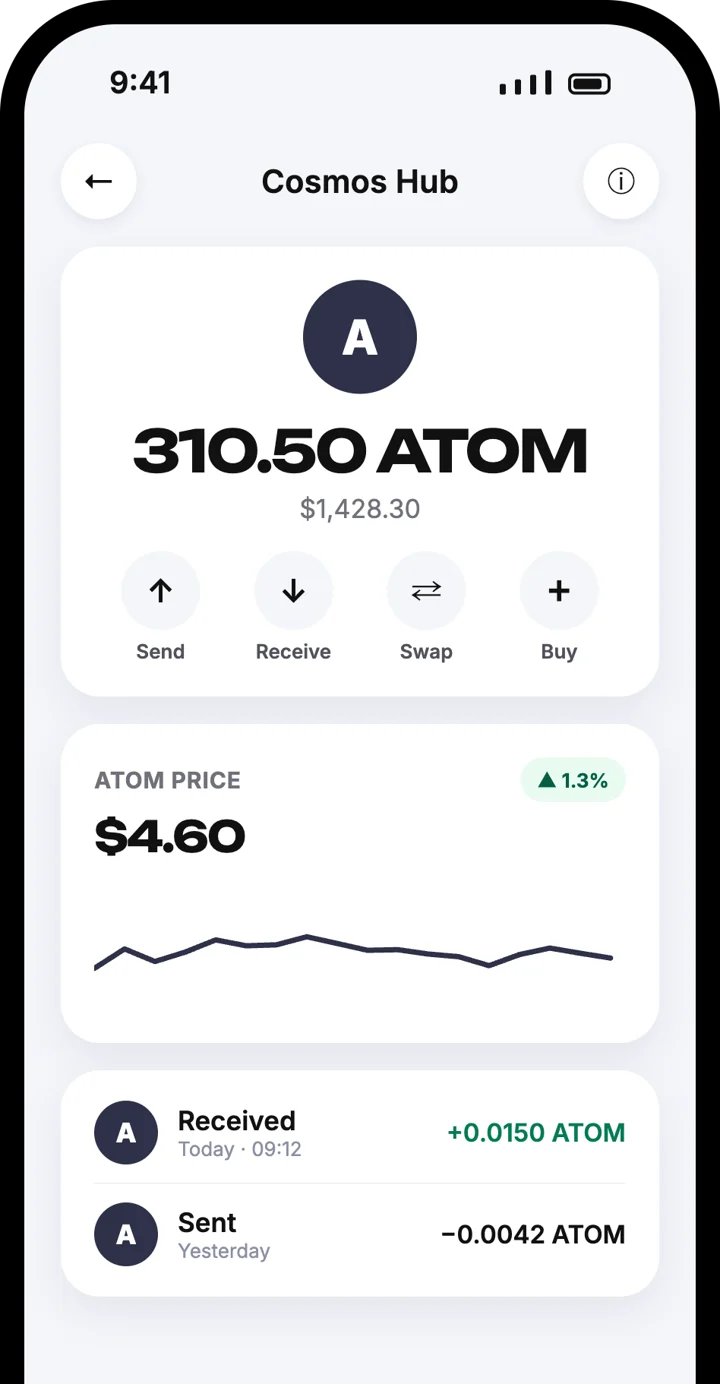


Cosmos is not a single blockchain. It is a network of independent, purpose-built chains, each running its own validator set on Tendermint or the newer CometBFT consensus engine, connected through the Inter-Blockchain Communication protocol. Atom is the native asset of the Cosmos Hub, one of the original chains in this ecosystem, but IBC lets assets and messages move between dozens of separate app chains without a centralized bridge operator.
This design gives developers flexibility to build application-specific chains rather than deploying everything on one shared ledger. For holders, it means your Cosmos-related assets are not one thing. Atom sits on the Hub, but IBC-connected assets can originate from entirely separate chains with their own security assumptions, block times and validator sets, which is worth understanding before you move funds around.
Self custody means the private keys controlling your Atom and IBC assets are generated and stored on your own device, not on a company’s servers. When you hold funds on an exchange, you are trusting that platform’s solvency, security practices and willingness to let you withdraw whenever you want. Self custody removes that dependency entirely.
The tradeoff is responsibility. With self custody, there is no support line that can reset your access if you lose your recovery phrase. That is a fair exchange for most long-term holders, since it eliminates counterparty risk, but it does mean backups, device security and careful handling of your seed phrase become your job rather than an exchange’s.
Many Cosmos chains let Atom and other native assets be delegated to validators as part of Blockchain Network Participation, where token holders help secure the network and, in return, may receive estimated network rates set by each chain’s protocol. This is not a fixed return and it is not guaranteed income. Rates change based on network conditions, total participation levels and each chain’s own parameters.
There are real considerations before participating, including unbonding periods that can lock funds for days or weeks, validator selection risk, and the fact that delegated assets are still exposed to price movement the entire time. Anyone considering this should research the specific chain’s rules directly rather than relying on marketing claims about expected outcomes.
Whether you are managing Atom directly or interacting with IBC-connected chains, the fundamentals of wallet security do not change. You want a setup where keys never leave your device, where you control your own recovery phrase in writing rather than a screenshot, and where the app you use has a clear, auditable transaction flow so you can see exactly what you are signing.
Biometric app locks, PIN protection and hardware wallet compatibility all reduce the risk of a compromised device leading to a compromised wallet. If you are managing assets across several ecosystems, from Cosmos-adjacent tokens to Bitcoin, USDT and EVM chains, a single well-secured app that keeps each chain’s keys properly isolated is far easier to manage safely than juggling several apps with inconsistent security models.
Atom Wallets is a non-custodial, multi-chain wallet supporting 9+ major networks including Bitcoin, Ethereum, TRON, BNB Chain, Solana, Polygon, Avalanche and XRP. Cosmos and its IBC-connected app chains are not on that native support list today, so this page is written as a guide to the ecosystem rather than a claim of direct Cosmos support inside the app.
Where Atom Wallets is genuinely useful for a Cosmos-focused holder is in managing everything else around it: your Bitcoin, your USDT on TRON for stable value transfers, and your EVM assets across Ethereum, BNB Chain, Polygon and Avalanche, all from one self-custody app with biometric lock and hardware wallet support, rather than spreading those holdings across several separate wallets.

A common pattern for active Cosmos ecosystem participants is keeping a portion of funds in USDT to sidestep volatility while positioning for the next move. Atom Wallets supports USDT on TRON (TRC-20) with a flat $2 fee per transfer, and network fees can be paid directly in USDT itself, so you do not need to separately hold TRX or another native gas token just to move funds.
This matters in practice: if you are rotating between Cosmos ecosystem exposure and stable value, having a fast, low-cost, self-custody rail for USDT removes a lot of the friction that usually comes with juggling gas tokens across multiple networks.

Before sending any Atom or IBC-connected asset, confirm the destination chain and address format carefully. Cosmos-based addresses use chain-specific prefixes, and sending to the wrong network or an incompatible address format can result in permanently lost funds, since there is no central authority to reverse a transaction.
Write your recovery phrase down physically, store it in more than one secure location, and never enter it into a website or app that was not the one you initially set up. No legitimate wallet support team will ever ask for your seed phrase, and that single fact stops the majority of crypto scams before they start.